Printmaking
Printmaking experiments on the intaglio press.
Completed during a printmaking course at the Rhode Island School of Design. This series of 8"x12" prints and mixed-media drawings depict the Story of Light.

Light begins at the center of our solar system.
The sun's innermost core is made up of billions of atoms.


Constantly in motion, these atoms are constantly colliding.

The collision heats and compresses the atoms together.

Under extreme pressure, the nuclei of the atoms will merge into a new element.

When two atoms merge, they release energy and photons.

This process is called fusion.

These initial protons are called gamma ray photons. These are not the kind of photons we can see with our eyes.

When these gamma ray photons lose energy trying to escape the sun, then they become visible light photons.

From the center of the sun, it will take tens of thousands of years before the photons can reach the surface.

In their journey, Photons will zigzag their way from atom to atom until they escape into space as sunlight.

Some photons can take millions of years to escape because of the electromagnetic soup called plasma.

Gradually the photon works its way outward, where it breaks free as a solar flare.

In the 1600's, scientists started to study the sun with telescopes.

They noticed there were dark spots on the sun's surface.

Galileo Galilei was the first to notice that the sunspots would move and disappear. This is his drawing.

He determined that this meant the sun was spinning, just like the Earth.

Later other scientists determined the sunspots were cool patches where energy had broken free.

These release of energy sets off a massive explosion. This is the magnetic field reacting to the sudden influx of energy.

Scientists are constantly monitoring the surface of our sun and our nearby stars for sunspots and solar flares.

In extreme cases, the blast might overcome the star's magnetic field. These are called Coronal Mass Ejections (CME).

We have tools that allow us to the CME's as they travel the Universe.

Light takes eight minutes to travel the 93 million miles from the sun to Earth. Light will also travel in every other direction and illuminate the rest of the solar system and beyond.

The amount of released light occurring every second is so vast that it is more than a billion billion times greater than the number of grains of sand on our planet.

Sun bursts pose no direct threat to human or other life. An explosion on the sun won’t even cause you to get a worse sunburn.

If it happens to be blown outward in the right direction, some fast-moving charged particles will be trapped by Earth’s magnetic field.
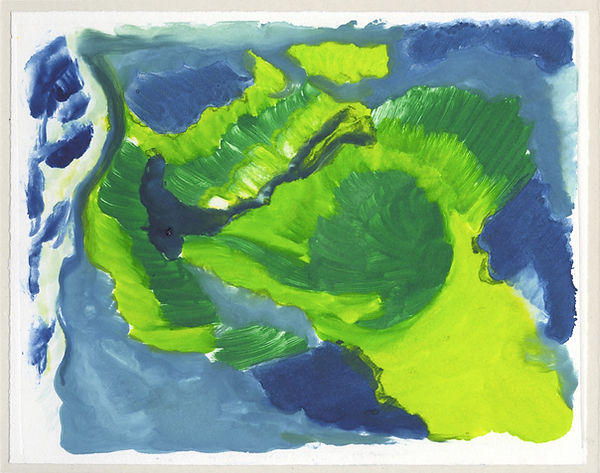
The trapped particles will be deflected into the upper atmosphere, triggering beautiful auroral displays in the night sky.

It kind of makes you want to go outside, put on your shades, and enjoy a nice warm explosion on the sun.